
Braimstorming activity on Digitalization and Modeling
Reading comprehension. After reading the text, answer ten comprehension questions.
Digitalization and Modeling
Modern product design combines sophisticated technology with systematic methodology to create innovative solutions. The process begins with comprehensive analysis of customer needs, translating qualitative requirements into measurable technical specifications through market research, user interviews, and competitive analysis.
Artificial intelligence and advanced design systems now enable rapid concept generation and evaluation. These platforms utilize neural networks and machine learning to explore design alternatives while considering manufacturing constraints. The integration of modular design strategies allows efficient development of complex products through well-defined functional components and interfaces.
Digital modeling transforms concepts into precise three-dimensional representations through parametric CAD systems. This phase leverages human expertise alongside computational capabilities, enabling real-time modifications and immediate visualization of changes. These digital models then undergo rigorous engineering validation using advanced simulation tools.
Computer-Aided Engineering (CAE) tools, including Finite Element Analysis (FEA), Computational Fluid Dynamics (CFD), and Multibody Dynamics (MBD), enable virtual testing and optimization before physical prototyping. This significantly reduces development time while improving reliability. The optimization phase involves iterative refinement based on simulation results, often revealing unexpected insights that enhance product performance.
The process culminates in comprehensive technical documentation and manufacturing preparation, ensuring efficient production while maintaining quality standards. Success depends increasingly on effective knowledge management, technology integration, and sustainability considerations throughout the product lifecycle.
Emerging technologies like virtual reality, digital twins, and IoT continue to reshape product development, promising faster innovation and improved quality. This evolution reflects a broader transformation where traditional engineering methods merge with digital technologies, creating more efficient, sustainable, and user-centered products while adapting to changing market demands.
Pronunciation of keywords
Study and practice the list of keywords related to the text. Here is a list of 20 key words from the text along with their phonetic transcriptions:
· Digitalization – /ˌdɪdʒ.ɪ.tə.laɪˈzeɪ.ʃən/
· Modeling – /ˈmɒd.əl.ɪŋ/
· Technology – /tɛkˈnɒl.ə.dʒi/
· Methodology – /ˌmɛθ.əˈdɒl.ə.dʒi/
· Innovation – /ˌɪn.əˈveɪ.ʃən/
· Analysis – /əˈnæl.ə.sɪs/
· Artificial intelligence – /ˌɑː.tɪˈfɪʃ.əl ɪnˈtɛl.ɪ.dʒəns/
· Neural networks – /ˈnjʊə.rəl ˈnɛt.wɜːks/
· Machine learning – /məˈʃiːn ˈlɜː.nɪŋ/
· Manufacturing – /ˌmæn.jəˈfæk.tʃər.ɪŋ/
· Modular design – /ˈmɒd.jʊ.lə dɪˈzaɪn/
· Three-dimensional – /ˌθriː.daɪˈmɛn.ʃən.əl/
· Parametric – /ˌpær.əˈmɛt.rɪk/
· Computational – /ˌkɒm.pjʊˈteɪ.ʃən.əl/
· Visualization – /ˌvɪʒ.u.ə.laɪˈzeɪ.ʃən/
· Finite Element Analysis (FEA) – /ˈfaɪ.naɪt ˈɛl.ɪ.mənt əˈnæl.ə.sɪs/
· Optimization – /ˌɒp.tɪ.maɪˈzeɪ.ʃən/
· Sustainability – /səˌsteɪ.nəˈbɪl.ə.ti/
· Virtual reality – /ˈvɜː.tʃu.əl riˈæl.ɪ.ti/
· Digital twins – /ˈdɪdʒ.ɪ.təl twɪnz/
Pronunciation of keywords
Pronunciation of keywords
Pronunciation of keywords
Pronunciation of keywords
Pronunciation of keywords
Pronunciation of keywords
Pronunciation of keywords
Pronunciation of keywords
Pronunciation of keywords
Pronunciation of keywords
Pronunciation of keywords
Pronunciation of keywords
Pronunciation of keywords
Pronunciation of keywords
Pronunciation of keywords
Pronunciation of keywords
Pronunciation of keywords
Pronunciation of keywords
Pronunciation of keywords
Pronunciation of keywords
Complete the sentences from this text with the studied keywords
Speaking. Preparation activity in class.
Here are YouTube video options to introduce your debate, specifically chosen to match the technical concepts in your text (CAD, FEA, CFD, Digital Twins):
Option 1: The Practical Example
Hydrauvision | CAD Simulation and Design: How Hydrauvision Deals with Pressure | Simcenter
-
It shows a real engineering company designing high-pressure systems. It perfectly illustrates the "translation of requirements into technical specifications" and the use of CAD and Simulation (FEA) mentioned in your text.
-
Connection to your questions:
-
Question 4 (FEA/Simulation): You can see the "stress tests" on the digital model.
-
Question 5 (Efficiency): They explain how they find errors in the office rather than on the construction site.
-
Option 2: The High-Performance Example
Scuderia AlphaTauri | Top driver performances thanks to digital transformation
-
It uses F1 racing to explain CFD (Computational Fluid Dynamics) and Digital Twins, which are key terms in the last paragraphs of your text.
-
Connection to your questions:
-
Question 7 (Digital Twins): Shows how data from the track goes back to the digital model.
-
Question 9 (Product Change): Discusses how new regulations forced a total redesign using digital tools.
-
Option 3: The Conceptual Overview
Digital Twin Technology Explained: Benefits & Real Examples
-
It provides a very clear academic explanation of the transition from traditional simulation to the modern Digital Twin and IoT integration mentioned in your conclusion.
-
Connection to your questions:
-
Question 8 (Challenges): Discusses the complexity of managing large amounts of data.
-
Question 6 (Sustainability): Explains how optimizing the lifecycle reduces waste.
-
Speaking: Open-ended discussion questions
1. What are some advantages of using artificial intelligence in product design?
2. How do companies find out what customers want before designing a product?
3. Why do you think digital modeling is important in product development?
4. How do simulation tools like Finite Element Analysis (FEA) help improve product quality?
5. In what ways can digitalization make product design faster and more efficient?
6. Why is sustainability important in modern product development? Can you give an example?
7. How do you think virtual reality and digital twins will change the way products are designed?
8. What are some possible challenges of using advanced technology in product design?
9. Can you think of a product that has changed a lot because of new technology? How did it improve?
10. If you could design a new product using digital tools, what would you create and why?
🏎️ The Great Debate: "The Digital Architect vs. The Human Craft"
The Scenario: A massive tech company is about to fire all its human designers and replace them with a fully automated, AI-driven Digital Twin system. Half of the class must defend the "Digital Evolution," and the other half must defend the "Human Essential."
🏁 Round 1: Initial Statements (The "Pitch")
Each side has 2 minutes to present their strongest arguments based on the text.
Team A: The Digital Innovators (Pro-Tech)
-
Focus: Efficiency and Precision.
-
The Pitch: "Why waste months on physical prototypes? With FEA and CFD, we can break a product a thousand times in a virtual world before spending a single cent on materials. Digitalization isn't just faster; it's the only way to achieve true sustainability by eliminating physical waste."
Team B: The Human Visionaries (Pro-Human)
-
Focus: Creativity and Empathy.
-
The Pitch: "A neural network can explore alternatives, but it doesn't know what a customer feels. Product design begins with qualitative requirements—human emotions. If we rely solely on simulations, we lose the 'soul' of the product and the spark of true innovation that a machine cannot simulate."
🤺 Round 2: The Rebuttal (The "Cross-fire")
Students must use the technical terms from your text to challenge the opposing side.
Questions Team A (Tech) should ask Team B:
-
"You talk about 'soul,' but how can a human designer manually calculate the Multibody Dynamics (MBD) of a complex engine as fast as a digital system? Aren't you just slowing down progress?"
-
"If we don't use Digital Twins, how do you plan to monitor a product's performance once it's in the customer's hands? Are you just going to hope it doesn't break?"
Questions Team B (Human) should ask Team A:
-
"If we automate everything with Generative AI, won't every product start looking the same? Where is the competitive advantage if everyone uses the same algorithms?"
-
"The text says success depends on knowledge management. If the AI makes the decisions, how will the next generation of engineers learn the 'why' behind the design?"
💡 Round 3: The "What If?" Challenge (Quick-fire)
Toss these scenarios at the class to spark immediate responses.
-
Scenario 1: "An AI-designed bridge passes all FEA simulations, but a human engineer has a 'bad feeling' about the aesthetic. Who do you trust?"
-
Scenario 2: "A Digital Twin predicts a product will fail in 3 years. Should the company tell the customer now, or wait for it to happen to save money?"
🏆 Round 4: Final Considerations (The "Legacy")
Each student must answer one of these for their final 'grade' in the debate.
-
The Synthesis: "In 2026, is the designer a 'builder' or a 'curator' of AI ideas?"
-
The Sustainability Goal: "Can a product truly be sustainable if it wasn't designed using digital optimization?"
-
The Future: "If you could have a Digital Twin of yourself to test your own health or skills, would you want it? Why or why not?"
Here is a handy "Engineer’s Cheat Sheet" designed to help you sound like industry experts during the debate. It breaks down the dense terminology from your text into "debatable" definitions.
🛠️ The "Digitalization & Modeling" Cheat Sheet
| Term | What it is (In plain English) | Use it in the debate when... |
| Parametric CAD | 3D design where if you change one measurement (parameter), the whole model updates automatically. | ...you want to argue about speed and flexibility. |
| FEA (Finite Element Analysis) | A virtual "stress test" to see where a part will bend or break under pressure. | ...you want to prove your product is safe and reliable. |
| CFD (Computational Fluid Dynamics) | A simulation of how liquids or gases (like air) flow around or through an object. | ...you are discussing aerodynamics (like F1 cars) or efficiency. |
| Digital Twin | A "live" virtual clone of a physical product that stays connected to it via sensors. | ...you want to talk about the future and real-time monitoring. |
| MBD (Multibody Dynamics) | Testing how different moving parts of a machine interact with each other. | ...you are debating complex machinery or robots. |
| Qualitative Requirements | What the customer feels or desires (soft data). | ...you are defending the Human/Empathy side of design. |
| Technical Specifications | What the product must do in numbers (hard data). | ...you are defending the Engineering/Precision side. |
| CAE (Computer-Aided Engineering) | The "umbrella term" for using software to test and improve designs. | ...you want to sound like a Manager overseeing the whole process. |
💡 Pro-Tips for the Students:
-
To sound smarter: Don't just say "we test it on the computer." Say: "We perform rigorous engineering validation using CAE tools to ensure reliability."
-
To shut down an argument: If someone says their design is better, ask: "But have you considered the manufacturing constraints, or is your design just a pretty picture?"
-
To win the "Green" argument: Use the phrase: "Digitalization allows for iterative refinement, meaning we optimize material use before we ever touch a physical resource."
Watching activity
Click on the correct option
What is a digital twin?

Click on the correct option
How do digital twins evolve over time?
Click on the correct option
Why are digital twins important in product development?

Click on the correct option
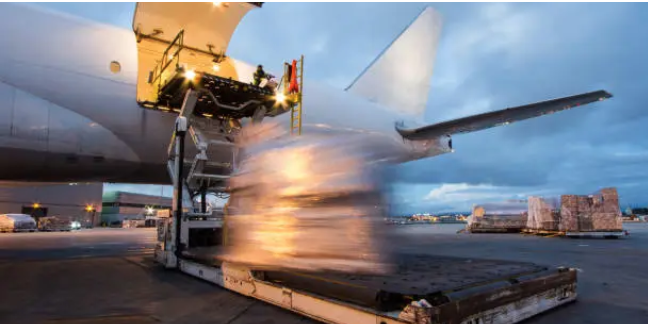
How did Siemens use a digital twin for an electric aircraft motor?
Click on the correct option
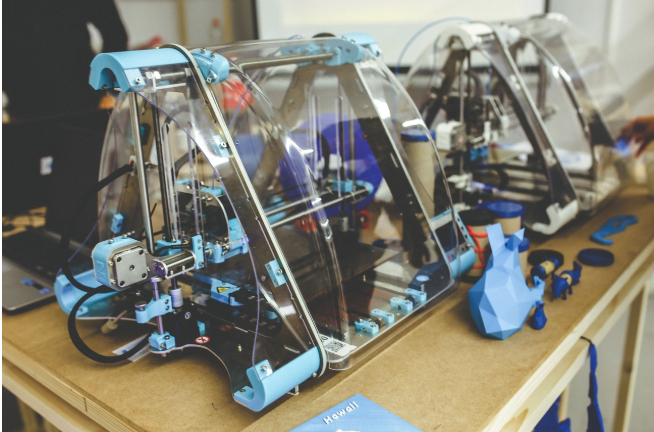
What is one benefit of using digital twins with 3D printing?
Click on the correct option
How do digital twins help in manufacturing with robots?

Click on the correct option
What is one way digital twins improve operations?

Click on the correct option
How does artificial intelligence (AI) enhance digital twins?
Click on the correct option
What company is mentioned as working with Siemens on digital twin technology?

Click on the correct option
Why are digital twins considered the backbone of industry?

Grammar: the passive voice
Learning review: Kahoot
Learning review: Kahoot
https://create.kahoot.it/share/digitalization-and-modeling/5126bd1e-8fd7-4c36-bbd1-894214996d66